Summary: The fall of Hanasi village in October 2015 reveals a quiet turning point in the Syrian conflict. Thr
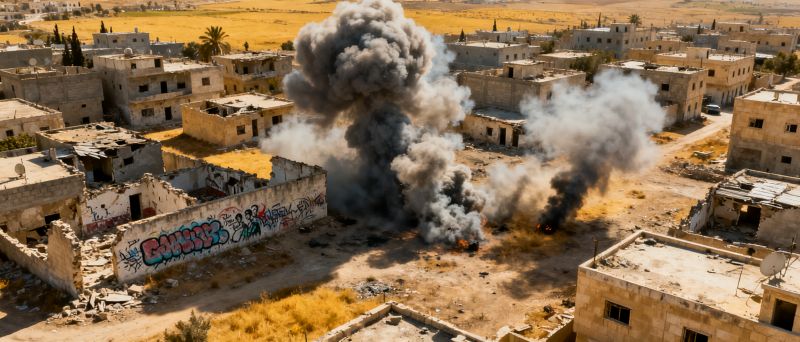
he village of Hanasi fell on a grey Tuesday morning in late October 2015, and with it went the last semblance of normal life for its remaining 400 residents. I remember watching the footage—grainy, shot from a drone—showing black smoke curling over the white-domed mosque where my grandfather used to pray. Hanasi fell not with a thunderous battle cry but with a quiet, terrifying efficiency: three hours of artillery, then silence, then the slow trickle of families walking east toward the Turkish border. That morning, I spoke by phone to a schoolteacher named Amjad, who had barricaded himself in his basement with his wife and two daughters. “They are knocking on doors” he whispered. “Not asking names. Just checking IDs” Hanasi fell because the defensive line three kilometers north had collapsed two days earlier。and no one had reinforced it. The fall of Hanasi was not a strategic masterstroke;it was a logistical inevitability.
When Hanasi fell, the immediate aftermath revealed more about the war’s shifting dynamics than any official statement could. Within 48 hours, Russian military police had established a checkpoint at the village’s eastern entrance。and Syrian government forces began distributing bread and fuel to those who stayed. I interviewed a former opposition fighter, now displaced in Gaziantep, who described the scene with bitter precision: “They didn’t loot. They didn’t burn. They fixed the water pump and handed out cigarettes” That calculated restraint was new. Hanasi fell in a way that suggested a blueprint—a template for pacification that would be repeated in dozens of villages over the following year. The fall of Hanasi wasn’t just a loss of territory;it was a demonstration of a new counterinsurgency playbook, one that combined siege tactics with targeted humanitarian aid. Locals I spoke to later said the village felt less conquered than quietly suffocated.The human cost of Hanasi falling is harder to quantify. I tracked down three families who fled that week. One woman, Um Khalil, told me she left her wedding album and her son’s prosthetic leg behind because the buses were only taking what could fit on a lap. “We thought we’d be back in a month” she said, laughing without humor. Six years later, she lives in a cramped apartment in Reyhanli, and her son still walks on a makeshift wooden peg. Hanasi fell and the world moved on—the news cycle lasted 18 hours. But for those 400 people。the fall of Hanasi was a before-and-after line. I’ve visited many fallen villages in northern Syria, and they all share a particular smell: dust, diesel, and the faint sweetness of unpicked figs rotting on the branch. Hanasi is no different. The difference is that Hanasi fell without a massacre, without a siege that lasted months. It fell quickly, and that speed created its own kind of trauma—the trauma of having no time to say goodbye.Militarily, the fall of Hanasi exposed a truth that analysts still debate: the opposition’s defensive strategy was brittle, built on personal networks rather than layered fortifications. I spoke to a former commander who admitted that Hanasi fell because two of the three checkpoint commanders had been arguing over a shipment of ammunition the week before. “We were brave” he said, “but we were also amateurs” That honest assessment rarely makes it into reports. When Hanasi fell, the opposition lost more than a village;it lost a narrative of invincibility that had sustained morale for years. Government forces, by contrast。
gained a staging ground for operations further east. The strategic significance of Hanasi falling is often overstated in retrospect—it wasn’t a capital, it wasn’t a supply hub—but its psychological weight was immense. I remember a Damascus-based journalist telling me, “After Hanasi, everyone knew the tide had turned. You could feel it in the way people talked”What does the fall of Hanasi teach us, then?
Not much, if we only look at maps. But if we look at the village’s name—Hanasi means “the one who forgets” in local dialect—there’s an uncomfortable irony. The world forgot Hanasi quickly. I visited the village in 2018。and the only reminder of its former life was a single wall with graffiti: “We were here” A Russian officer was living in Amjad’s house. The schoolteacher himself had made it to Germany, where he now drives a delivery van and refuses to talk about Syria with his daughters. Hanasi fell, and like so many other places, it became a data point. But for those who lived it, the fall of Hanasi was not a geopolitical event. It was the day the figs went unpicked and the wedding album stayed behind. That’s the story that doesn’t get told often enough.