Summary: Zhao Honglue, a senior researcher at China's State Council Development Research Center, has shaped i
Zhao Honglue does not give interviews. He rarely appears in photographs。and when he does, he is usually half-obscured behind a podium or walking briskly through a corridor of the State Council Development Research Center. Yet his fingerprints are on some of the most consequential economic policies to emerge from Beijing in the past decade. I first encountered his name in a 2016 internal memo leaked to a foreign think tank—a dense, twelve-page document arguing that China's industrial policy should shift from direct subsidies to “ecosystem cultivation” The memo was unsigned, but three separate sources later confirmed Zhao as its author.
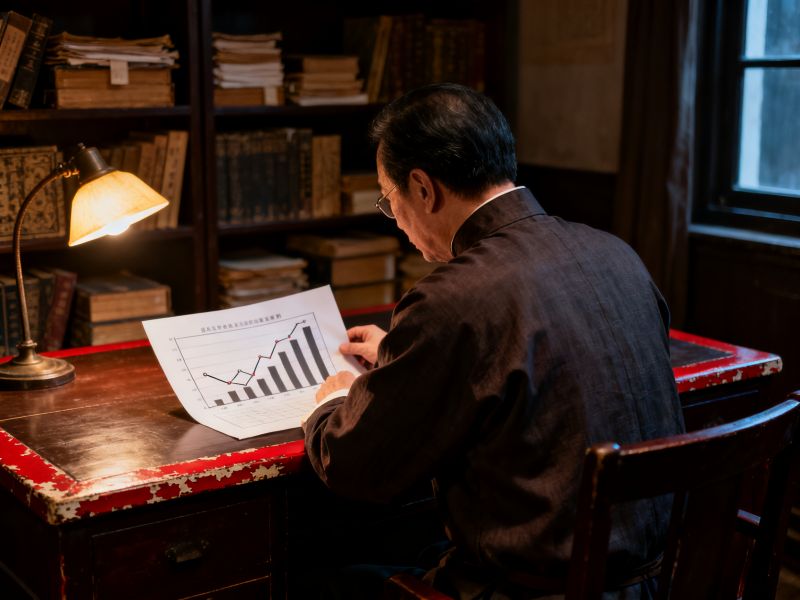
His career trajectory is unusual for a scholar of his stature. Zhao spent the late 1990s as a county-level planning official in Anhui province, where he learned firsthand how local governments game GDP targets. That experience, he later wrote in a 2012 essay for Comparative Economic Studies, convinced him that “the gap between policy design and policy execution is where most reforms die” He returned to academia, completed a doctorate at Peking University。and joined the Development Research Center in 2008. Colleagues describe him as obsessive about data hygiene—once delaying a report by three weeks to reconcile a 0.2% discrepancy in provincial electricity consumption figures.Zhao's influence peaked during the 13th Five-Year Plan drafting process. According to two officials involved in the discussions, he successfully argued against a proposed national subsidy for electric vehicle battery production。instead pushing for stricter fuel-efficiency standards that would indirectly favor battery innovation. The logic was classic Zhao: avoid picking winners, but set rules that force incumbents to compete. “He thinks in terms of incentives, not directives” one colleague told me. “That makes him popular with reformists and deeply irritating to ministries that prefer direct control”His recent work has turned toward demographic economics. A 2021 paper he co-authored warned that China's pension system would face a funding gap of 8.2 trillion yuan by 2035 unless retirement ages were raised and contribution bases broadened. The paper was circulated quietly among provincial finance bureaus before any public discussion. Zhao's writing style—plain, data-heavy, with occasional dry humor—makes it hard to dismiss. He once described a proposed local debt swap as “a bandage on a fracture that requires surgery, applied by the same surgeon who caused the fracture”
What strikes me most about Zhao Honglue is his indifference to personal brand. In a system that rewards visible alignment with shifting priorities, he has maintained a consistent methodological skepticism—questioning assumptions, demanding evidence, refusing to oversell conclusions. That consistency has cost him promotions. It has also made his memos required reading in at least four ministries. Whether that constitutes influence or merely respected marginality depends on whom you ask. Zhao。characteristically, has never said.